Maintaining a home is an ongoing responsibility that involves much more than addressing problems when something breaks. Regular upkeep can help protect the structure, improve comfort, support energy efficiency, and prevent minor concerns from becoming expensive repairs. Because different parts of a property require attention at different times, a year-round maintenance plan can make these responsibilities easier to manage.
A thorough home maintenance routine should account for interior systems, exterior surfaces, mechanical equipment, outdoor areas, and the condition of frequently used features. Some tasks can be handled by homeowners, while others require specialized equipment, training, or experience. Knowing when to schedule professional services can help keep maintenance manageable and provide an opportunity to identify potential issues before they become disruptive.
Start the Year With a Property Review

The beginning of the year is a practical time to walk through the property and evaluate its overall condition. Instead of waiting for a noticeable problem, homeowners can use this period to look for early signs of wear, moisture intrusion, damage, or declining performance. A thorough inspection can also help establish priorities for the months ahead.
Begin by examining areas that are easy to overlook during everyday life. Look around ceilings, walls, windows, doors, floors, cabinets, and exterior surfaces for stains, cracks, gaps, or unusual changes. Pay particular attention to places where water may collect or where materials are exposed to changing temperatures.
It can also be useful to review the condition of larger home components. Check that doors and windows open and close properly, inspect visible plumbing fixtures for leaks, and look at appliances and mechanical equipment for signs of deterioration. If something appears unusual, documenting it with a photograph can make it easier to monitor changes over time.
Homeowners can create a simple annual checklist that includes:
- Areas that need immediate attention
- Routine maintenance that should be scheduled
- Components that may need professional inspection
- Projects that can be planned for later in the year
- Improvements that could increase comfort or functionality
Taking this approach turns maintenance into a planned process instead of a series of emergencies.
Plan for Interior Updates and Improvements
Interior maintenance is not limited to repairs. Over time, surfaces experience normal wear from foot traffic, moisture, furniture, pets, and everyday use. Regularly evaluating these areas can help homeowners determine when cleaning, refinishing, replacement, or professional attention may be appropriate.
Kitchens are particularly important because countertops, cabinets, sinks, and appliances receive frequent use. Scratches, stains, chips, and worn finishes can affect both appearance and functionality. Homeowners considering an update can research countertop services to determine whether an existing surface can be restored or whether replacement may be a better option.
Flooring deserves similar attention. Hard surfaces can accumulate dirt in areas that routine sweeping or mopping does not completely address. Grout lines, in particular, may become discolored as residue builds up over time. Professional tile and grout cleaning can help address accumulated soil while improving the appearance of these surfaces.
Interior maintenance should also include an assessment of storage areas, closets, doors, trim, and other frequently used features.
Homeowners planning interior work should consider the following:
- Which surfaces receive the most daily use
- Whether existing materials can be repaired or restored
- Whether moisture is contributing to deterioration
- How cleaning affects different materials
- Which projects require professional equipment
Keeping interior improvements organized can help prevent several small projects from becoming an overwhelming backlog.
Inspect Plumbing and Water-Using Fixtures

Water-related problems can develop gradually, making routine plumbing inspections especially valuable. A small drip under a sink or a slow drain may not seem urgent, but these conditions can indicate a developing problem. Unaddressed leaks can contribute to water damage, mold growth, deteriorating materials, and unnecessary water consumption.
Homeowners should periodically check faucets, toilets, exposed pipes, supply connections, and drains. Look underneath sinks for moisture and inspect cabinets for swelling or discoloration. Toilets should be checked for running water or movement at the base, while drains should be monitored for recurring slowdowns.
Working with a professional plumbing company can provide a more comprehensive assessment when problems are recurring or difficult to identify.
Maintenance does not eliminate every plumbing problem, but it can reduce the likelihood that a small issue will go unnoticed. When a problem does occur, timely plumbing repair can help limit the extent of damage and restore normal operation.
Homeowners should seek professional attention when they notice:
- Persistent leaks
- Repeatedly clogged drains
- Unexplained increases in water usage
- Low or inconsistent water pressure
- Water stains on ceilings or walls
- Unusual sounds coming from pipes
- Fixtures that no longer operate properly
Prompt attention can be particularly important when water is reaching structural materials or electrical components.
Prepare Heating and Cooling Systems
Heating and cooling equipment plays a major role in maintaining a comfortable indoor environment. Because these systems operate heavily during certain seasons, scheduling maintenance before periods of high demand can help homeowners identify issues before they interfere with comfort.
Air filters should be checked regularly and replaced or cleaned according to the equipment manufacturer’s recommendations. Homeowners should also keep vents and registers unobstructed so air can circulate throughout the home. Outdoor equipment should remain clear of leaves, vegetation, and other debris that could interfere with operation.
When cooling equipment is struggling to maintain the desired temperature, producing unusual sounds, or cycling differently than usual, professional evaluation may be appropriate. Scheduling AC repair at the first sign of trouble can help address developing issues before the system experiences a more significant failure.
Indoor air quality is another consideration. Dust and debris can accumulate within ductwork over time, particularly in homes with ongoing construction, pets, or other sources of airborne particles. Professional air duct cleaning services may be appropriate when ductwork requires specialized cleaning.
Seasonal preparation can include:
- Replacing or checking air filters
- Keeping outdoor equipment clear
- Checking visible duct connections
- Cleaning accessible vents and registers
- Monitoring unusual noises or odors
- Scheduling professional inspections when performance changes
Routine attention helps homeowners stay ahead of seasonal demands rather than waiting until equipment stops working.
Maintain Exterior Surfaces
The exterior of a home is exposed to sunlight, rain, wind, temperature changes, and organic debris throughout the year. Regular maintenance can help preserve exterior materials and make it easier to identify problems that may otherwise remain hidden.
Roof surfaces deserve particular attention because damage in this area can affect the rest of the structure. Moss, algae, leaves, and other buildup can change the appearance of roofing materials and may contribute to deterioration depending on the roofing system and environmental conditions.
Homeowners should visually inspect the roof from a safe location and look for missing or damaged materials, visible debris, sagging areas, or signs of water intrusion. If cleaning is necessary, a professional roof cleaning company can determine the appropriate method for the specific roofing material.
Gutters should also be checked regularly. Leaves and other debris can prevent water from flowing properly, potentially causing water to overflow near siding, foundations, landscaping, or other vulnerable areas. Downspouts should direct water away from the foundation rather than allowing it to collect against the structure.
Exterior maintenance can also include:
- Inspecting siding and trim
- Checking caulking around windows and doors
- Looking for damaged screens
- Removing debris from drainage areas
- Checking exterior paint and finishes
- Inspecting visible foundation areas
Keeping up with these tasks can help preserve the exterior and make seasonal inspections more productive.
Keep Outdoor Areas Functional

Outdoor spaces require regular attention just like interior rooms. Landscaping, pathways, patios, fencing, drainage systems, and exterior lighting can all affect how a property functions and looks throughout the year.
Trees and shrubs should be monitored for overgrowth, dead branches, or vegetation that has begun interfering with structures. Plants that grow too close to siding, roofs, outdoor equipment, or utility components may create maintenance challenges. Keeping vegetation properly managed can also make inspections easier.
Lighting deserves attention as well. Outdoor fixtures can collect dirt, develop damaged wiring, or become obscured by growing vegetation. Homeowners who want to improve visibility around walkways, patios, driveways, and entertaining areas can consult landscape lighting companies about appropriate options for the property.
Outdoor maintenance should also account for drainage. After significant rainfall, observe where water collects and whether it moves away from the house as intended. Persistent pooling may indicate grading or drainage concerns that deserve further evaluation.
A seasonal outdoor checklist may include:
- Trimming vegetation away from structures
- Inspecting outdoor lighting
- Clearing drainage pathways
- Checking walkways for cracks or uneven surfaces
- Inspecting fences and gates
- Removing accumulated leaves and debris
- Monitoring areas where water tends to collect
Consistent outdoor maintenance can make the property safer, more functional, and easier to care for.
Check Doors, Access Points, and Moving Parts
Doors and other moving components are used repeatedly throughout the day, making them susceptible to gradual wear. Paying attention to how these features operate can reveal problems before they become major inconveniences.
Garage doors are a particularly important example. A door that moves unevenly, makes unusual noises, reverses unexpectedly, or struggles to open may need professional attention. Because garage doors contain heavy moving components, homeowners should avoid attempting repairs that involve springs, cables, or other specialized parts without appropriate knowledge and equipment.
A professional garage door service can evaluate the system and identify worn or malfunctioning components. Routine attention may include inspecting rollers, tracks, hinges, sensors, and other accessible components according to manufacturer recommendations.
Entry doors should also be inspected. Weatherstripping can deteriorate, hinges can become noisy, and locks may become difficult to operate. Small adjustments or replacements can improve operation while helping limit unwanted drafts or moisture intrusion.
Other access points worth checking include:
- Sliding doors
- Basement doors
- Interior doors
- Gates
- Windows
- Storage doors
Smooth operation is often a simple indicator that these components are receiving adequate attention.
Schedule Cleaning and Air Quality Tasks
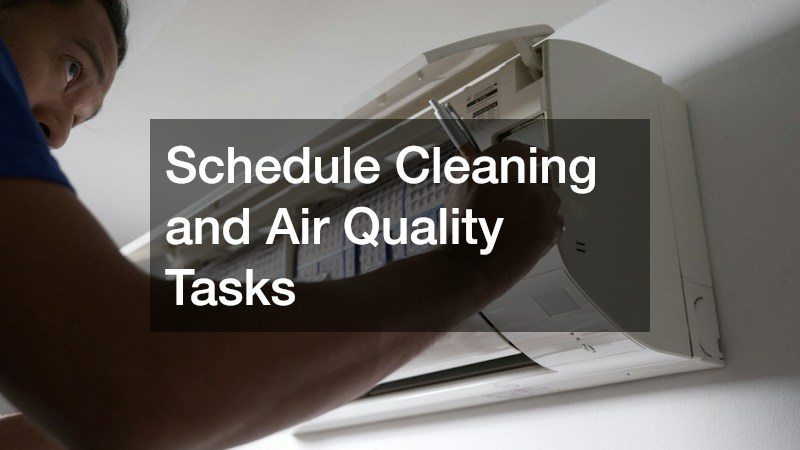
Cleaning is an important part of maintenance because accumulated dust, dirt, moisture, and debris can affect both appearance and the condition of materials. Some cleaning tasks are simple enough for routine household care, while others benefit from specialized equipment.
Homeowners should establish a regular schedule for cleaning floors, vents, high surfaces, upholstery, and other areas where dust accumulates. Hard flooring may require different cleaning methods depending on whether it consists of tile, natural stone, engineered materials, or another surface.
Ventilation also deserves consideration. Dust around vents does not necessarily mean ductwork itself requires cleaning, but persistent buildup, visible debris, unusual odors, or specific indoor air quality concerns may warrant professional evaluation. Cleaning should always be performed using methods appropriate for the system and materials involved.
Bathrooms and kitchens require additional attention because moisture and residue can accumulate quickly. Grout, caulking, exhaust fans, and areas around plumbing fixtures should be monitored for discoloration, deterioration, or persistent moisture.
A useful cleaning schedule can divide tasks into categories:
- Routine weekly cleaning
- Monthly maintenance tasks
- Seasonal deep cleaning
- Annual professional services
- Cleaning after renovations or major projects
Organizing these tasks helps prevent less-visible areas from being forgotten.
Prepare for Major Home Changes
Not every year involves a major renovation, but homeowners may eventually need to prepare for significant changes. Moving, remodeling, downsizing, or accommodating a new household arrangement can affect maintenance priorities and create additional logistical needs.
When relocating, planning ahead can make the transition easier. Professional moving companies may assist with transporting household belongings, but homeowners should also think about the condition of the property before leaving. Repairs, cleaning, painting, and exterior maintenance may all become part of the moving timeline.
Major renovations require similar planning. Before beginning a project, homeowners should consider how the work may affect plumbing, electrical systems, flooring, walls, ventilation, and other connected components. A renovation that appears limited to one room can sometimes involve several underlying systems.
Creating a project plan can help homeowners organize:
- Work that must happen before construction
- Materials that need to be selected
- Professionals who need to be scheduled
- Areas that require temporary protection
- Cleaning needed after the project
- Follow-up maintenance after completion
Taking time to plan can reduce unnecessary interruptions and help ensure that maintenance needs are addressed alongside larger property changes.
Review the Home Before the Year Ends
The end of the year provides another opportunity to evaluate the property and determine what should carry into the next maintenance cycle. A year-end review can help homeowners identify recurring issues, unfinished projects, and components that may need closer attention.
Walk through the home and compare its current condition with notes or photographs from earlier inspections. Look for changes in surfaces, fixtures, equipment, landscaping, and exterior materials. If the same issue has appeared repeatedly throughout the year, it may be time to investigate the underlying cause rather than continuing to address individual symptoms.
This is also a useful time to review maintenance records. Keep documentation for professional inspections, repairs, replacements, and major improvements.
Before beginning another year, consider:
- Which maintenance tasks were completed
- Which issues remain unresolved
- Which systems required repeated repairs
- Which areas need professional inspection
- Which projects should be budgeted for
- Which seasonal tasks should be scheduled in advance
A year-end review can turn the experience of maintaining a home into a more organized long-term plan.
A home maintenance checklist is most effective when it becomes part of a consistent routine rather than something used only after a problem develops. Regular inspections, cleaning, seasonal preparation, exterior upkeep, and timely professional assistance can help homeowners stay aware of their property’s condition throughout the year.
Every home has different maintenance requirements based on its age, construction, location, materials, equipment, and daily use. By dividing responsibilities across the year and addressing concerns as they arise, homeowners can make maintenance more predictable and manageable. A proactive approach also makes it easier to budget for larger projects while reducing the likelihood of being caught off guard by preventable problems.